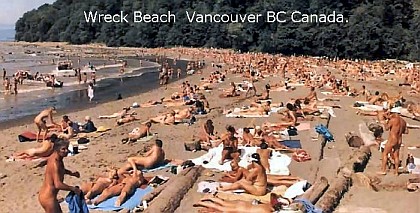
From a federal petition calling for more space for public nudity to the shared change rooms at a Markham community centre, there is a question worth discussing: in Canada, a country that stresses individual freedom and multicultural inclusion, should the privacy, cultural traditions and daily habits of different residents also be respected?
CC.NEWS — Markham, November 7, 2026, comprehensive report by editor-in-chief Jin Hong
A federal petition concerning public nudity in Canada has once again attracted widespread attention in recent days.
The petition, launched by Scott Blakely, a resident of Gibsons, British Columbia, and a member of the Federation of Canadian Naturists, seeks changes to Canada’s legal rules on public nudity so that simple nudity is no longer automatically treated as indecent behaviour.
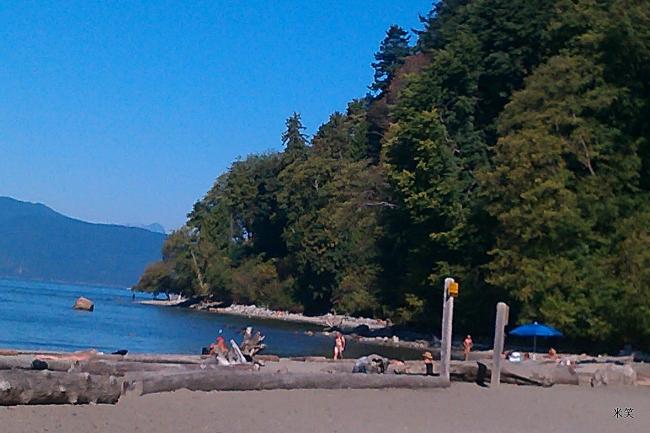
The petition’s demands cover not only established nude recreation sites such as Wreck Beach in Vancouver and Hanlan’s Point Beach in Toronto, but also seek to extend peaceful, non-sexual nudity to public spaces such as parks and trails.
For now, this remains an initiative calling on Parliament to study the question; it does not mean Canada has declared public nudity fully legal.
Supporters emphasize individual freedom and bodily autonomy. That can be part of a public policy discussion.
But the question is this: when individual freedom moves into public space, should the feelings of other users also be taken into account? Should one person’s choice become everyone’s default choice?
This question does not exist only in parks and on beaches. It also arises in the public facilities we use every day.
1. One swimming pool: why can it accommodate different cultural choices?
Having swum regularly for many years, I often see scenes like these at public pools in several Markham community centres:
Some women wear headscarves and swimwear that covers them from head to toe; some wear ordinary swimsuits; and others choose more revealing two-piece swimwear.
Some want to cover their bodies as much as possible, while others are more accustomed to open, lightweight swimwear. People of different ages and cultural backgrounds swim in the same pool, each living according to their own habits.
In my view, this is a true microcosm of a multicultural society.
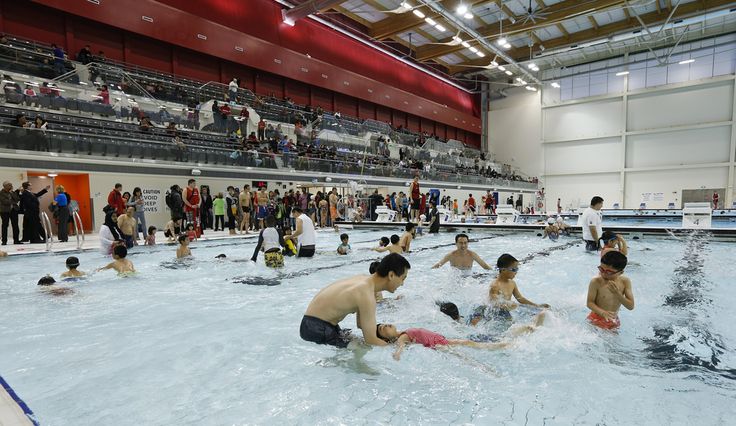
There is no need to ask people who wear full-body swimwear to change what they wear, and no need to ask people in two-piece swimwear to change their choice. As long as pool safety and hygiene rules are observed, why can we not respect one another?
So here is the question:
If a public pool can accommodate different clothing habits, why can a change room not likewise offer different options?
Why is it that some people want separate men’s and women’s change and shower areas, yet may be unable to find suitable space?
In my view, a public swimming pool is first and foremost a public place for residents to exercise, relax and enjoy the pleasure of sport. People come here to stretch their bodies and relieve stress, not to remain tense and self-conscious the whole time. Respecting different people’s cultural habits and bodily privacy is certainly important, but public space should not be turned into a place that feels stressful at every turn. On the basis of mutual respect, allowing everyone to enjoy swimming easily, comfortably and happily is likewise a goal that public facilities should pursue.
2. Shared change rooms at Markham community centres: beyond convenience, how much choice should there be?

When using public swimming facilities at several Markham community centres, I have noticed differences in change room design from venue to venue. The pool change rooms at Milliken Mills Community Centre deserve particular attention.
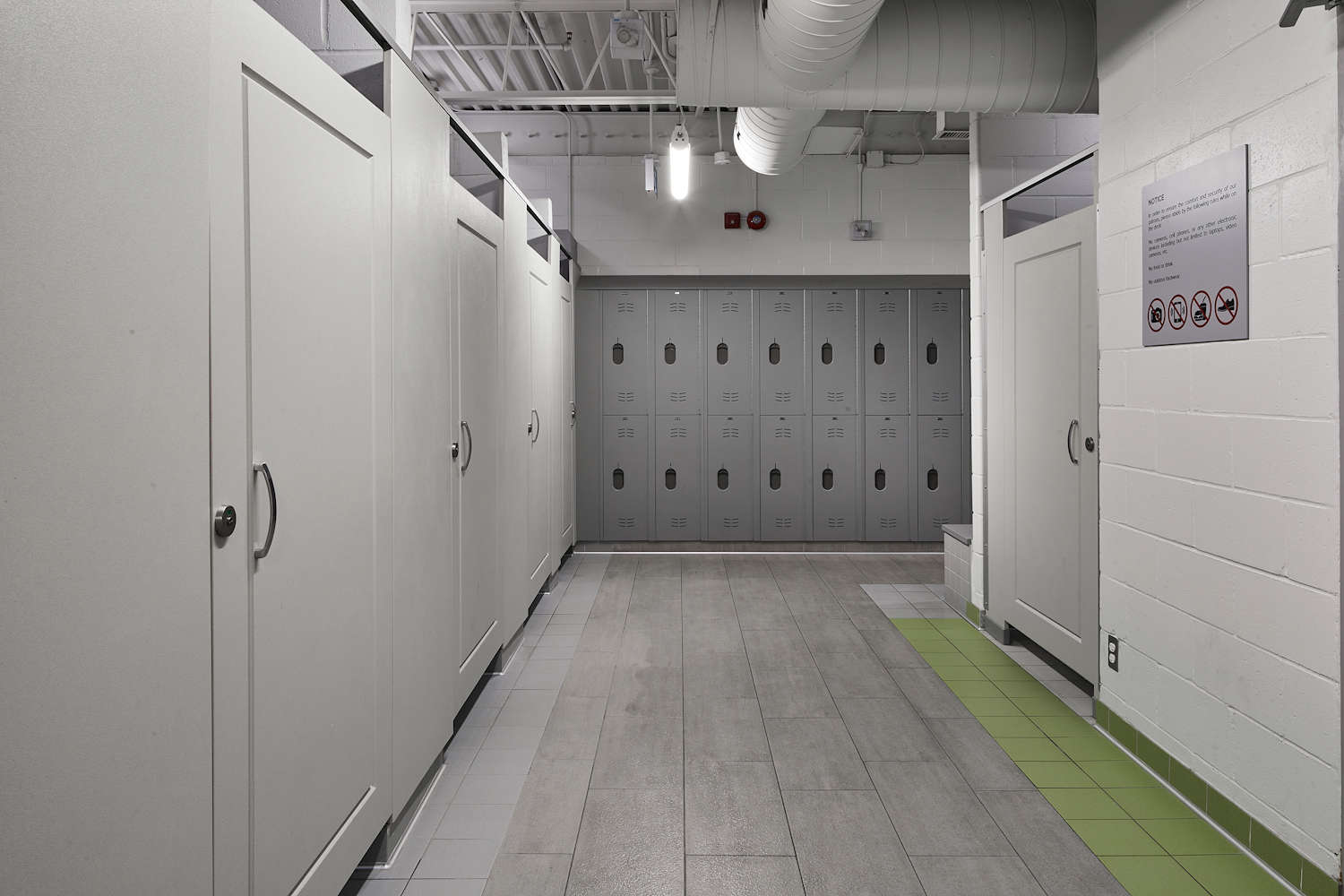
According to the City of Markham’s official information, the pool has two shared change rooms, providing change and shower space used by both men and women, along with separate private change cubicles.
But if residents want a shared shower area separated by gender, sorry — no such option exists here.
More notable still, this centre has had an incident of surreptitious cellphone recording. York Regional Police reported that in August 2024, a minor discovered someone pointing a phone at them in the shared change room. Police later arrested a 31-year-old man and laid two charges of voyeurism.
I also noticed that the shared change area includes a separate family area containing facilities similar to plastic change tables. These are presumably care and change tables for people with disabilities or for children, so that parents and caregivers can provide assistance. But some people have mistakenly used them for other purposes.
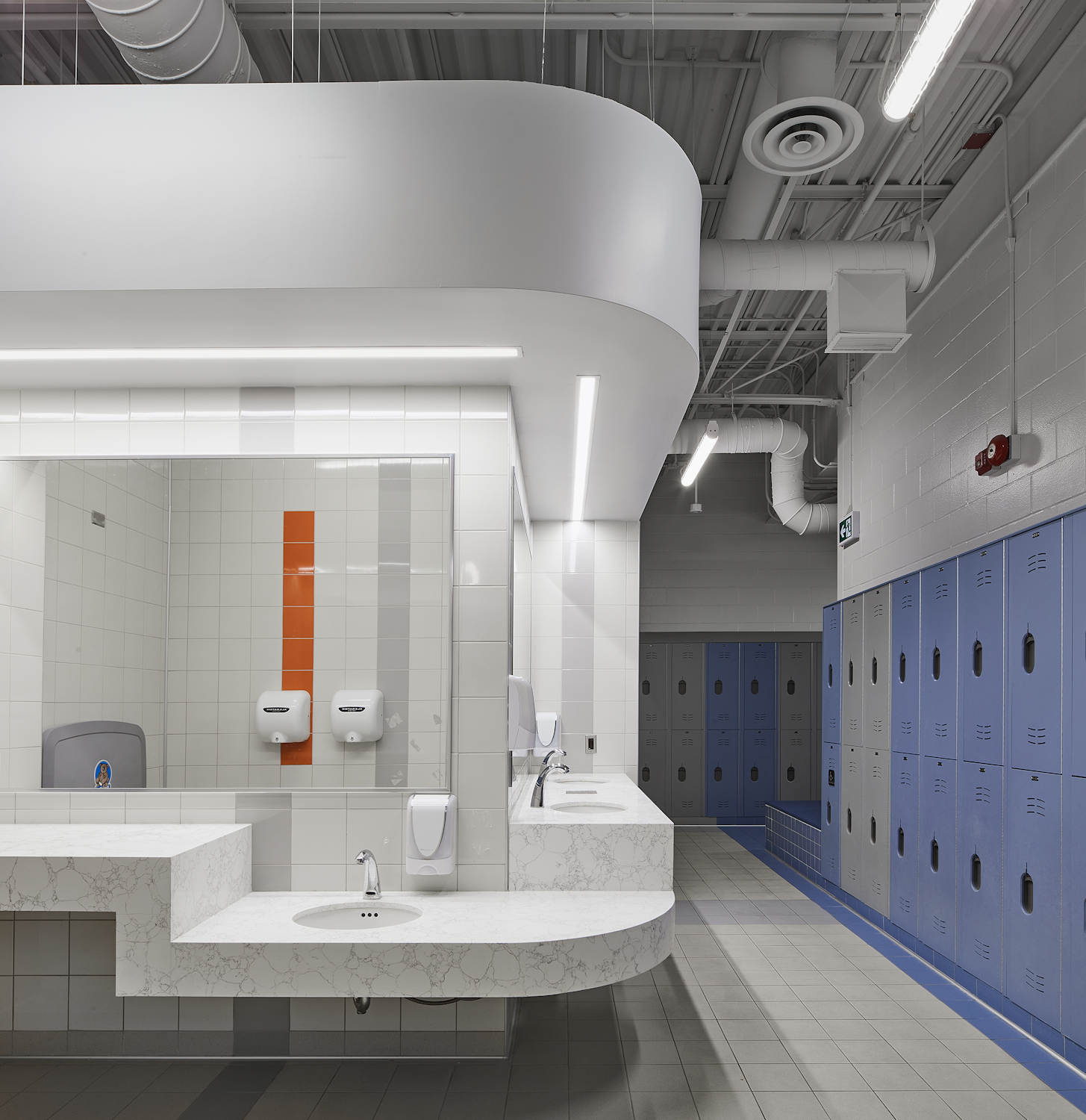
I have also come across people who, out of long-standing change room habits, occasionally forget that they are in a space shared by men and women and change completely nude. This is not necessarily meant to offend anyone, but it can leave users who value bodily privacy feeling embarrassed.
In Markham, some other public pools are frequently packed, and it is not easy for residents to book a swimming session; yet the pool at Milliken Mills Community Centre often has spaces available. Does this not also suggest something?
Of course, individual criminal cases are no reason to reject shared change rooms, but these real-world circumstances do raise a question: while public facilities emphasize convenience and inclusion, do they adequately protect the privacy and safety of users?
Some people need family care space, some value religious tradition and bodily privacy, some are used to shared facilities for men and women, and some want men’s and women’s areas separated. Why can these needs not be given equal weight?
It is worth noting that, also in Markham, I find the swimming facilities at the Pan Am Centre to be more reasonable in their change room arrangements. It has gender-separated change areas as well as family change rooms, giving users with different needs more choice.
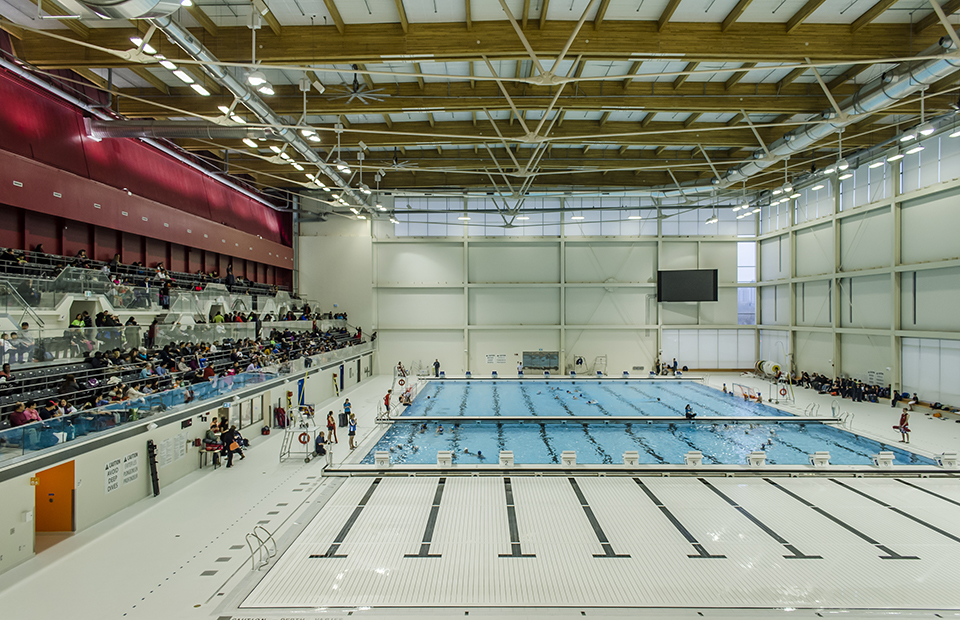
The Pan Am Centre pool devotes a considerable number of hours to professional training and sporting events, so the time ordinary residents can book is relatively limited, and it is sometimes not easy to secure a session.
3. Inclusive design should add choices, not reduce them
I am not opposed to shared change rooms, nor to providing care facilities for people with disabilities, children and families. The question is whether public facilities can be designed more flexibly.
In venues where conditions allow, could gender-separated change areas, shared change areas and family care areas all be retained at the same time? Could shower and change cubicles with adequate privacy be provided?
More importantly, before facilities are renovated or built, should residents of different ages and cultural backgrounds not be fully consulted?
Public facilities are built and maintained with taxpayers’ money. Has the government truly listened to the views of different groups? If a design makes things convenient for some people while leaving others without a choice, should it be reassessed?
Conclusion: genuine multicultural inclusion means giving different people choices
From the Vancouver petition on public nudity to the shared change rooms at a Markham community centre, these may look like two different issues, but both in fact involve the balance between individual freedom and the management of public space.
We can respect naturists’ right to choose nude recreation, and we should also respect the feelings of other residents; we can provide care facilities for people with disabilities and children, and we should also look after those who value gender separation and bodily privacy.
Why can people of different cultures and different habits not each have their own choice, instead of requiring everyone to adapt to a single model?
The value of multiculturalism is not to make everyone the same, but to enable different people to live according to their own habits while respecting the choices of others.
That is the direction a multicultural Canadian society is truly worth upholding.
The images in this article are from public websites.