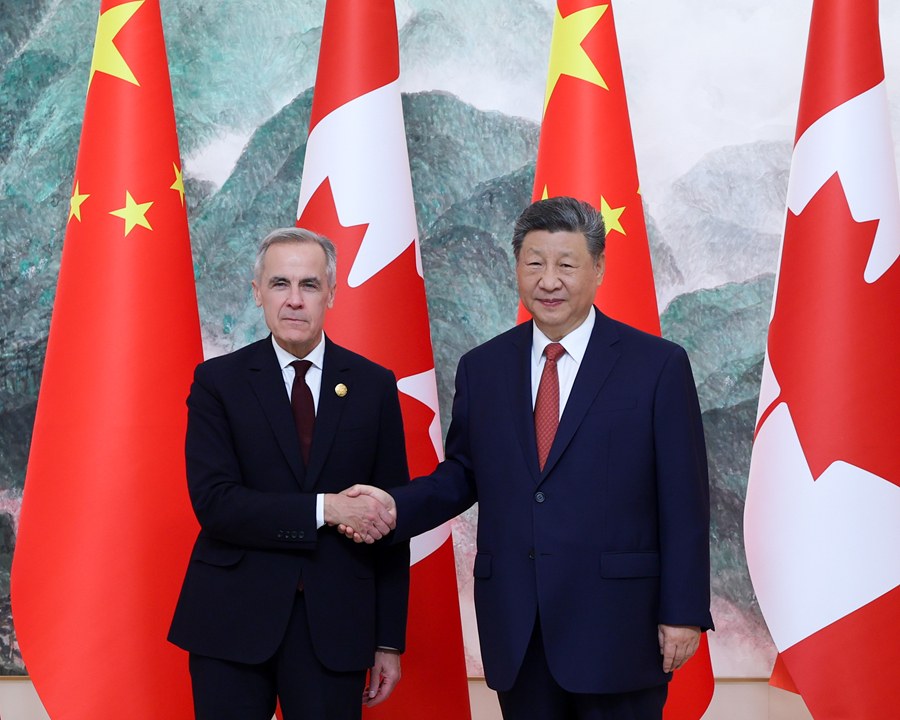
SHENZHEN (CC.NEWS) — On the morning of November 17, 2026, Chinese President Xi Jinping met with Canadian Prime Minister Mark Carney in Shenzhen, Guangdong province, on the margins of the 33rd APEC Economic Leaders’ Meeting. The two leaders reaffirmed the “New China-Canada Strategic Partnership” established earlier this year and reached landmark agreements to expand trade, deepen cooperation in emerging sectors, and stabilize bilateral relations on the basis of mutual respect and pragmatic engagement.
Guiding Principles: Mutual Respect and Seeking Common Ground
President Xi noted that China and Canada, both vital economies in the Asia-Pacific region, possess deeply complementary economic strengths and a long-standing tradition of people-to-people friendship. The improvement and stable development of bilateral relations serve the fundamental interests of both peoples and align with the prevailing historical trend.
Reflecting on over half a century of diplomatic ties, Xi emphasized that the relationship’s foundation rests upon “mutual respect, equality, mutual benefit, and seeking common ground while shelving differences.” So long as both sides respect each other’s core interests and approach development opportunities with a constructive mindset, bilateral ties will remain resilient through evolving international circumstances.
Xi Jinping Proposes Four-Point Framework for Bilateral Ties
To advance the bilateral partnership, President Xi outlined four key recommendations:
- 1. Deepening Political Mutual Trust: Maintaining constructive communication across all levels, enhancing objective understanding of each other’s development paths, and managing differences constructively.
- 2. Aligning Strategies and Expanding Cooperation: Consolidating traditional collaboration in trade, energy, agriculture, resources, and finance, while unlocking new growth engines in clean tech, green transition, and the digital economy.
- 3. Broadening People-to-People and Cultural Exchanges: Encouraging dynamic partnerships across education, tourism, scientific research, youth, and subnational exchanges between sister cities and provinces.
- 4. Defending Multilateralism and Global Governance: Championing the central authority of the United Nations, defending rules-based multilateral trade centered on the World Trade Organization (WTO), and fostering open regional economic integration.
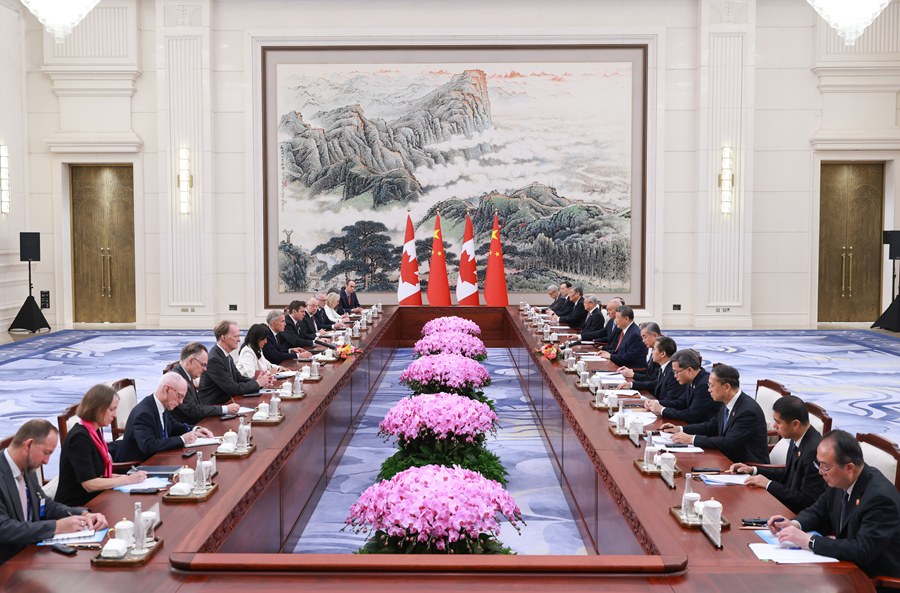
Canada’s Response: Carney Urges “Shrinking Differences, Expanding Cooperation”
Congratulating China on successfully hosting this year’s APEC summit, Prime Minister Mark Carney responded warmly to President Xi’s proposals.
Carney observed that since the inception of the New Strategic Partnership earlier this year, ministerial interactions have accelerated, bilateral trade volumes have experienced robust growth, and practical cooperation has yielded substantial dividends. These milestones demonstrate that Canada and China can effectively navigate disagreements and achieve mutually beneficial results through direct, candid dialogue.
Prime Minister Carney articulated a clear strategic imperative for bilateral ties:
“Canada is committed to working with China to deepen strategic trust and actively ‘shrink the list of differences and expand the list of cooperation.’ We look forward to deepening our collaboration across trade, clean energy technologies, premium agricultural exports, artificial intelligence applications and governance, and two-way tourism.”
Highlighting Canada’s identity as a Pacific nation, Carney reaffirmed Ottawa’s steadfast support for free trade and open supply chains, pledging close coordination within APEC and international forums to combat climate change and bolster global macroeconomic stability.
Widespread Acclaim Across Canadian Business and Diaspora Communities
The Shenzhen summit was greeted with widespread optimism across Canadian business circles, export associations, and the Chinese Canadian community. Analysts noted that Prime Minister Carney’s emphasis on “expanding the cooperation list” aligns seamlessly with China’s high-standard opening-up agenda. The meeting marks a definitive transition toward pragmatic, stable bilateral relations, providing strong momentum for cross-border commerce, diaspora ties, and economic resilience.