From Marital Controversy and Export Controls to Founder Succession: A Personal Storm Tests Corporate Governance at the Global AI Chip Giant
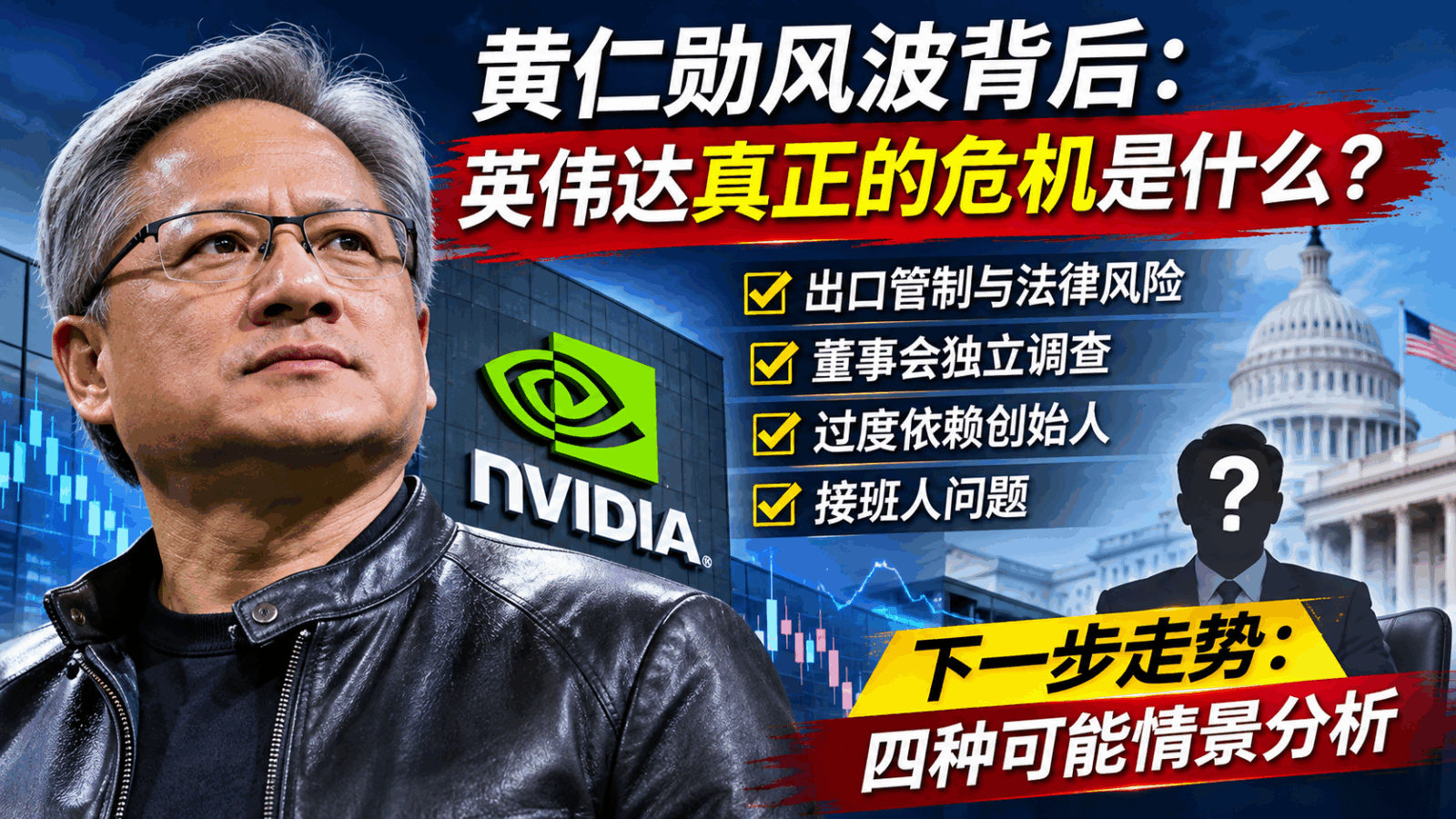
CC.NEWS Toronto, November 10, 2026 (By Tom Kim) — NVIDIA, the linchpin of the global artificial intelligence boom, has found itself embroiled in mounting public and regulatory scrutiny after co-founder and Chief Executive Officer Jensen Huang became the focus of intense media reports regarding personal relationships and alleged foreign intelligence interest.
Huang has acknowledged marital infidelity to company employees and indicated his full willingness to cooperate with inquiries. On November 8, Nvidia’s Board of Directors announced the launch of an independent investigation to review reports suggesting that Huang may have been targeted by foreign intelligence operatives.
The fallout has rapidly expanded beyond personal conduct into high-stakes matters of U.S. export controls, national security compliance, internal corporate governance, board oversight, and executive succession planning.
1. Legal Analysis: Infidelity Is the Surface; Export Controls Are the Core Risk
Prominent U.S. attorney Clay Zhu pointed out a crucial legal distinction: there is currently insufficient evidence to substantiate espionage allegations against the individual associated with Huang. Under U.S. legal standards, espionage charges require robust, specific evidentiary proof rather than inferences drawn from personal or business interactions.
Zhu noted that marital infidelity, while damaging to personal reputation, does not in itself trigger corporate legal liability. The substantive legal exposure lies in whether companies associated with the individual procured Nvidia advanced GPUs and subsequently diverted or transshipped them to China in breach of U.S. export controls, and whether Huang had knowledge of or facilitated such arrangements.
Since 2022, Washington has imposed strict export restrictions on cutting-edge AI accelerators. Leading GPUs such as the A100, H100, and Blackwell series face stringent licensing requirements and cannot be shipped directly to the Chinese market. Cross-border supply chains and multi-tiered cloud leasing arrangements have created complex regulatory compliance challenges.
The critical questions the independent investigation must answer are:
- How many Nvidia chips were purchased by the entities in question?
- What was the verified end-user destination of these accelerators?
- Did any transactions contravene U.S. Department of Commerce Bureau of Industry and Security (BIS) regulations?
- Did Huang possess knowledge of compliance red flags or influence commercial allocations?
- Did Nvidia’s internal compliance apparatus and board exercise timely and effective oversight?
2. Legal Strategy: Why Acknowledge the Relationship?
California trial lawyer David Liu analyzed the shift in Huang’s public stance from a legal defense perspective. Having previously characterized the individual merely as an ordinary business client, Huang subsequently admitted to a personal relationship.
Liu observed that this move likely reflects advice from legal counsel weighing risks ahead of potential congressional or regulatory inquiries. If investigators already possess documentary or electronic evidence of a relationship, continued denial creates severe exposure to false statement statutes under federal law. Acknowledging personal lapses, while painful for corporate public relations, significantly mitigates criminal perjury risks.
3. Corporate Governance and the ‘Key-Person’ Dilemma
Beyond export compliance, the controversy brings Nvidia’s governance architecture into sharp focus. For three decades, Jensen Huang has been the defining visionary and absolute driving force behind Nvidia’s ascent from a PC graphics startup to a multi-trillion-dollar titan of computing.
However, extreme centralization of authority carries inherent ‘key-person risk.’ When a company’s market valuation is tightly bound to a single iconic leader, any personal crisis threatens immense corporate disruption. Mature global institutions — such as Apple after Steve Jobs, or Microsoft following Bill Gates — proved that sustainable longevity requires institutionalized systems, distributed leadership, and battle-tested succession frameworks.
4. Market Impact and Investor Focus
Nvidia shares have experienced heightened volatility as Wall Street digests the implications of the board inquiry and potential regulatory friction. Market analysts emphasize that four critical factors will determine Nvidia’s trajectory:
- The credibility and findings of the board’s independent review;
- Whether U.S. regulatory or congressional bodies initiate formal proceedings;
- Whether Nvidia formalizes a transparent executive succession and oversight roadmap;
- The continued resilience of global hyperscaler capital expenditures in AI infrastructure.
Author’s Note: As an individual retail shareholder of Nvidia, I follow these developments not only with journalistic curiosity, but with an investor’s keen interest in sound governance, regulatory compliance, and institutional stability. This analysis reflects publicly available facts and legal commentary, and does not constitute financial or investment advice.