CC.NEWS Toronto On the evening of November 7, 2026, the Last Spike Tribute Dinner, hosted by the Foundation to Commemorate the Chinese Railroad Workers in Canada (FCCRWC), was held at Casa Deluz in Scarborough, Greater Toronto. Several hundred guests gathered for the occasion, including elected officials from all three levels of government in Canada — federal, provincial and municipal — diplomatic envoys from a number of countries, representatives of the Toronto Railway Museum, veterans’ organizations, descendants of Chinese railroad workers and head-tax payers, and community leaders from across the region. On this landmark anniversary, those present honoured the more than 17,000 Chinese labourers who, more than 140 years ago, carved a path through perilous peaks and sheer cliffs with their bare hands and laid the main artery of Canadian nationhood — and called on all Canadians to remember forever the indispensable contribution of the Chinese community to the founding of Canada.
A historical echo: the world-famous photograph with no Chinese faces, and 4,000 lives laid to rest in a foreign land
On November 7, 1885, at Craigellachie in British Columbia, the “Last Spike” was driven into the Canadian Pacific Railway (CPR), joining the east and west coasts. That moment marked the true geographic and political union of the world’s second-largest country by land area, and Canada entered a new chapter as a modern nation.
Yet in the world-famous photograph that has come to symbolize the birth of Canada, not a single Chinese face appears.
The historical record cannot be concealed. To cut through the most treacherous sections of the Fraser Valley and the Rocky Mountains — the most dangerous stretch of the entire North American continent — more than 17,000 Chinese labourers left their homeland and risked everything. They blasted rock in wind and snow at thirty to forty degrees below zero, and they died in the frequent explosions, landslides and deadly avalanches. More than 4,000 Chinese workers lost their young lives — on average, a Chinese worker lies beneath the ties of every kilometre of track. And when the railway was completed, the Chinese pioneers did not receive the recognition or citizenship they had earned; instead they faced decades of a punitive “Head Tax,” followed by 24 years of the Chinese Exclusion Act, which tore families apart and kept husbands from wives and fathers from children.
Exactly 141 years later, representatives of every sector of Toronto society gathered in one room to brush the dust of history from these long-silent railway heroes and to restore to them the national honour and dignity they deserve.
A solemn opening: anthems, a lion dance eye-dotting ceremony and a martial arts display
The dinner opened in a solemn and dignified atmosphere. The renowned singer Kanna Qiu took the stage and led a heartfelt rendition of “O Canada” and the Chinese national anthem, with the entire hall standing and singing as the stirring melodies echoed through the banquet room.
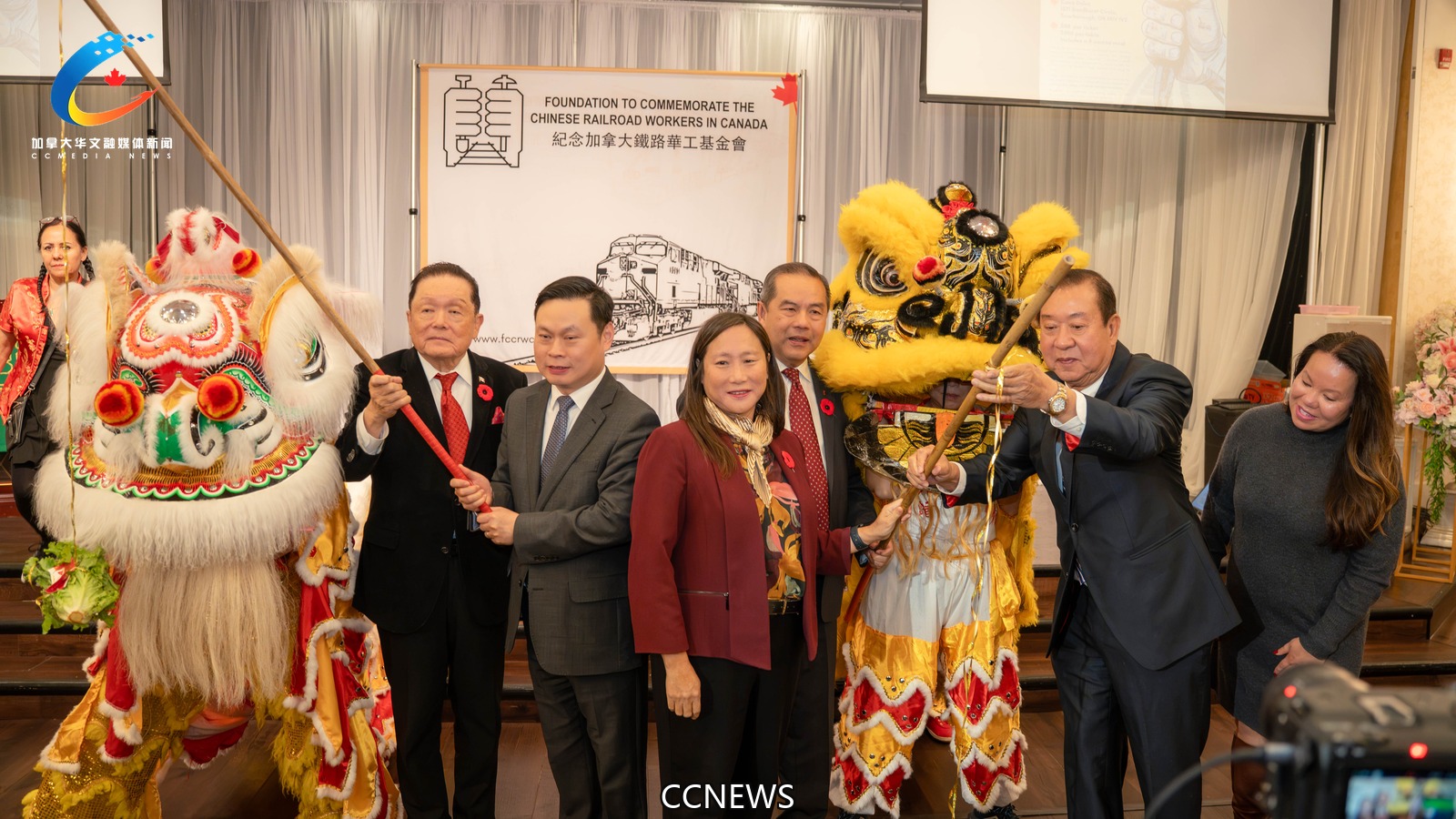
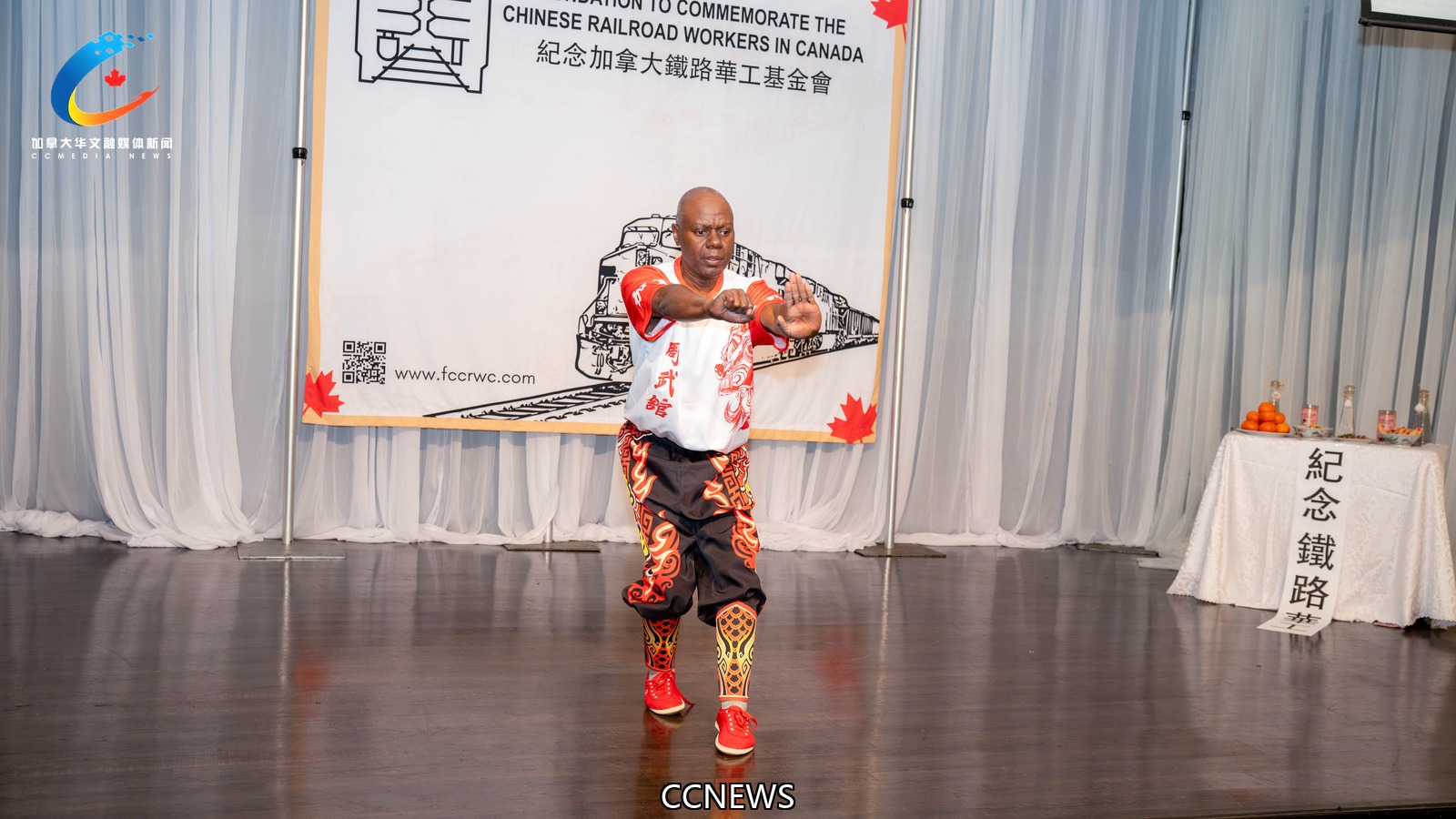
The opening highlight was then set alight by the Ian Chow Nanquan Beitui Kung Fu Club. Drums thundered and gongs rang out as two majestic traditional southern lions leapt and danced at the centre of the stage. The guests of honour — former Senator Victor Oh, Acting Consul General Cheng Hongbo, Honorary Consul Henry Lee and FCCRWC Chair Landy Anderson — came forward together and, holding brushes dipped in vermilion, dotted the eyes of the lions, bestowing light and righteousness upon the auspicious creatures and symbolizing the passing on of the railway workers’ spirit from generation to generation. Young students of the kung fu club then gave a vigorous display of fist forms and long-staff sparring, each movement full of force — a portrait of the self-reliance and vitality of a new generation of overseas Chinese youth.

Emcee Landy Anderson: “History has not gone away — it is alive in us today”
Dr. Landy Anderson, chair of the foundation and master of ceremonies for the evening, wore a bright red mandarin-collar cheongsam and carried the audience through every segment of the dinner with a voice both tender and resolute, moving the guests deeply.
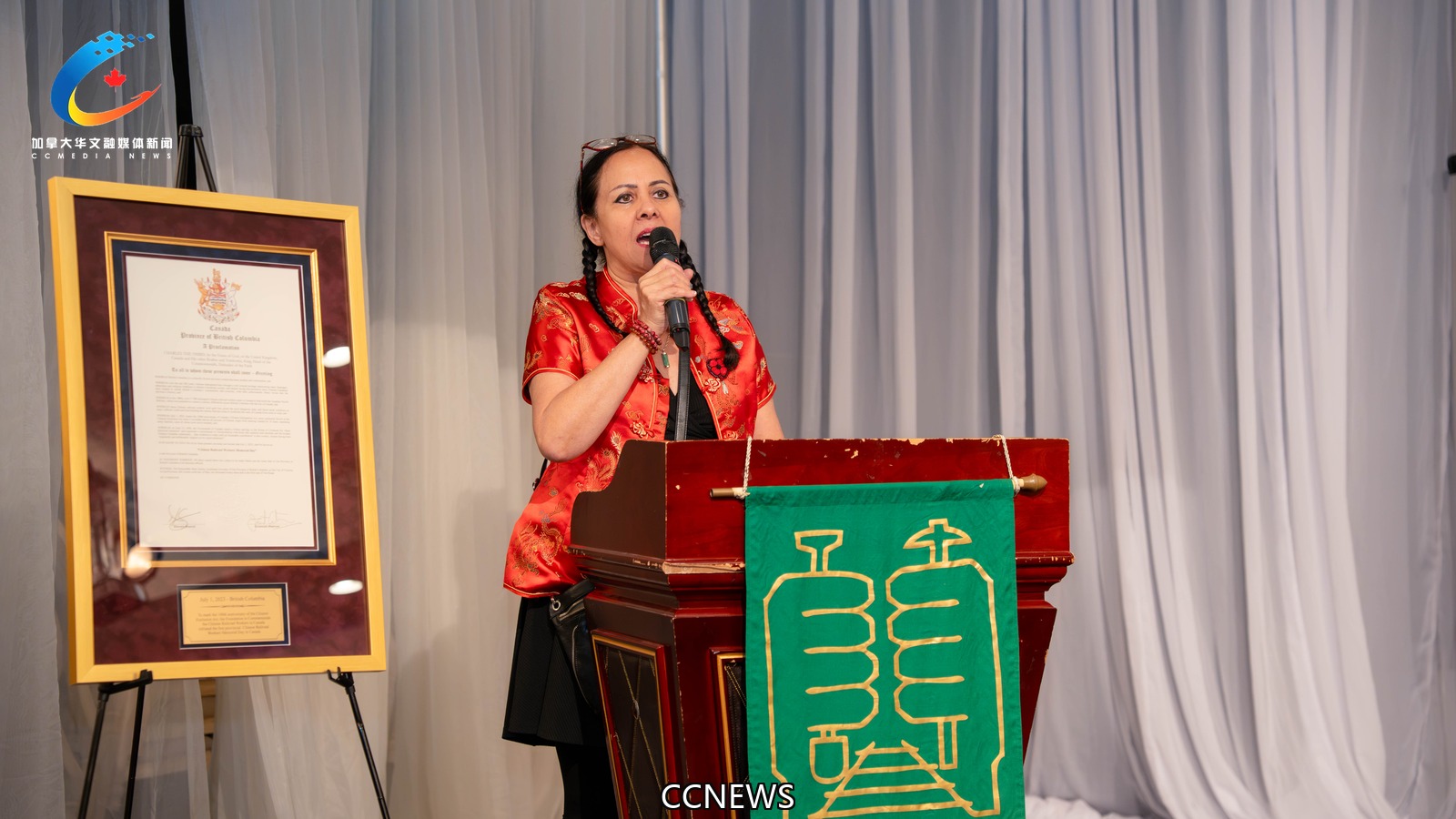
“Many people have a misunderstanding: they think the Chinese railroad workers and the Chinese Exclusion Act of more than a hundred years ago are a distant past, with nothing to do with life today. But I want to tell you: our history is still alive! Imagine, under the shadow of a 24-year Chinese Exclusion Act, a whole generation of Chinese families was forcibly separated — husbands and wives could not be reunited, fathers and sons never met. If those 24 years had not been taken from us, how much greater would the potential and strength of our community be today? The prosperity we enjoy today in business, politics, academia and policing was built on the extraordinary courage and endurance of our predecessors. I call on every young Chinese Canadian: go and understand where we came from, because remembering history is how we protect our tomorrow.”
— Dr. Landy Anderson, Chair, Foundation to Commemorate the Chinese Railroad Workers in Canada
Remarks by public officials: mainstream Canada and foreign envoys pay tribute to the railway builders
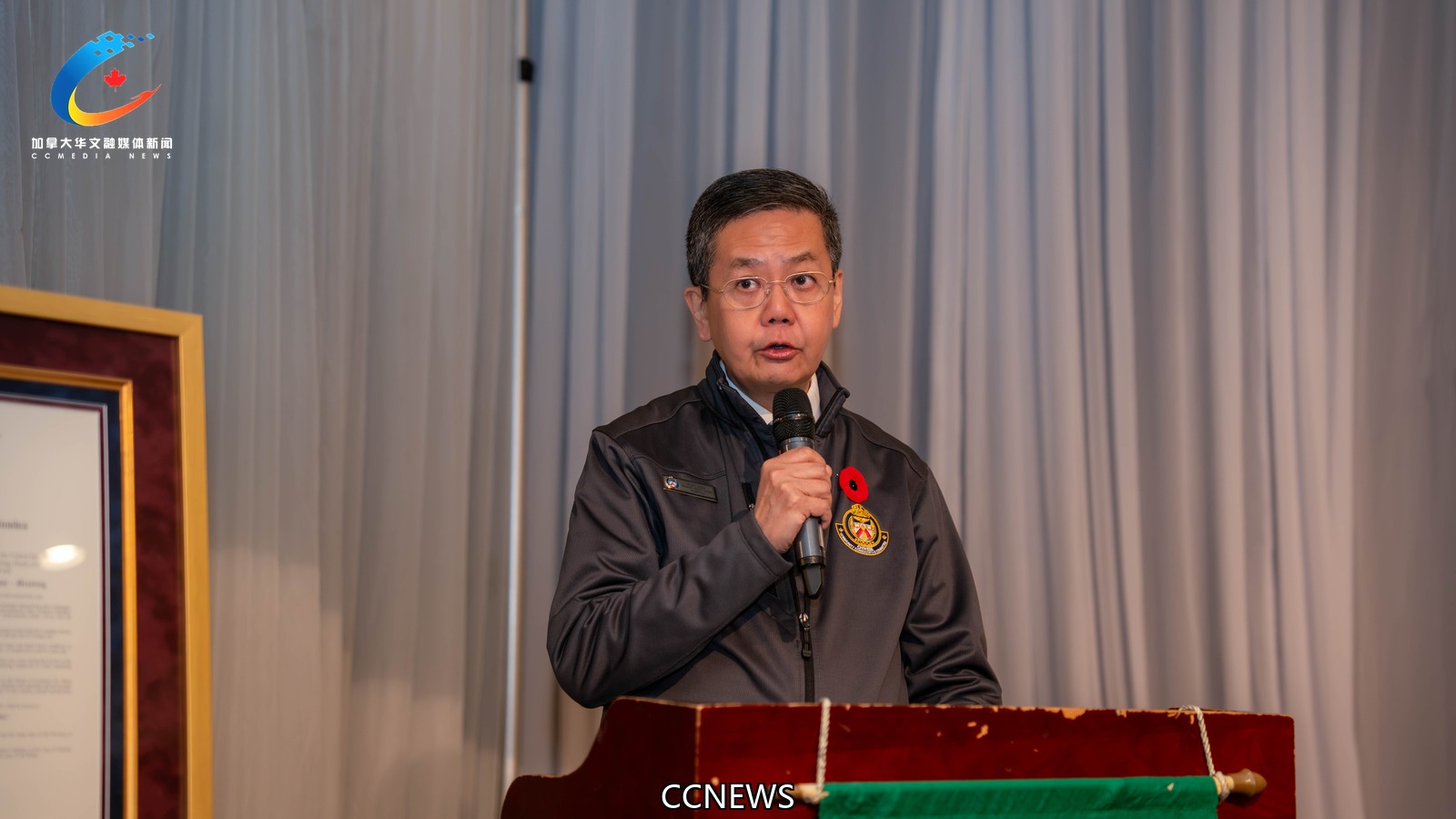
In the remarks segment, officials from all three levels of government and diplomatic envoys took to the stage to offer the highest recognition of the Chinese railroad workers:
- Former Canadian Senator Victor Oh: “We stand here tonight not only to remember past suffering, but to pay our highest respects to the great railway builders who shaped the Canada of today. One hundred and forty-one years ago they opened the arteries of this land. Their sacrifice must not be forgotten, and their place in history deserves the admiration of every Canadian.”
- Member of Parliament Jean Yip: “Seventeen thousand Chinese workers staked their lives, and more than four thousand were laid to rest in the wilderness. Every time I ride a VIA Rail train across Canada and watch the landscape fly past the window, I see in my mind those Chinese pioneers who cut through the cliffs with their lives. It is their sacrifice that connected communities from coast to coast.”
- Cheng Hongbo, Acting Consul General of the People’s Republic of China in Toronto: “This ‘last spike’ is small in size, yet it carries a historical weight of more than a thousand catties. That history is long past, but it speaks to us in the present. The Chinese railway workers built the most dangerous sections of the Canadian Pacific Railway with their blood and sweat; the fortitude and outstanding contribution they showed are a treasure of human civilization. To commemorate the spike today is not merely to revisit the sorrow on the gravestones — it is to turn this silent historical symbol into a living platform for the Chinese community of today to stand on its own feet and make its voice heard.”
- Henry Lee, Honorary Consul of Malaysia in Toronto: “As a descendant of Chinese from Southeast Asia, I feel deeply the bittersweet experience of our forebears putting down roots overseas. The endurance and dedication of the Chinese railroad workers laid the cornerstone for justice, diversity and equality in Canadian society.”




Speakers also included Sharifa Khan, chair of the Chinese Cultural Centre of Greater Toronto; Alex Gates, executive director of the Toronto Railway Museum; Liu Huiyun, president of the Canada-China Entrepreneurs Association; and Yuan Haiyao, representative of the Toronto Police Service’s Chinese Community Consultative Committee. Each praised the enduring contribution of the Chinese railroad workers from the perspectives of cultural heritage protection, museum research and community policing.
Passing on the torch: community pioneers honoured and youth scholarships awarded
Beyond paying tribute to history, the dinner looked to community service today and to nurturing the next generation.
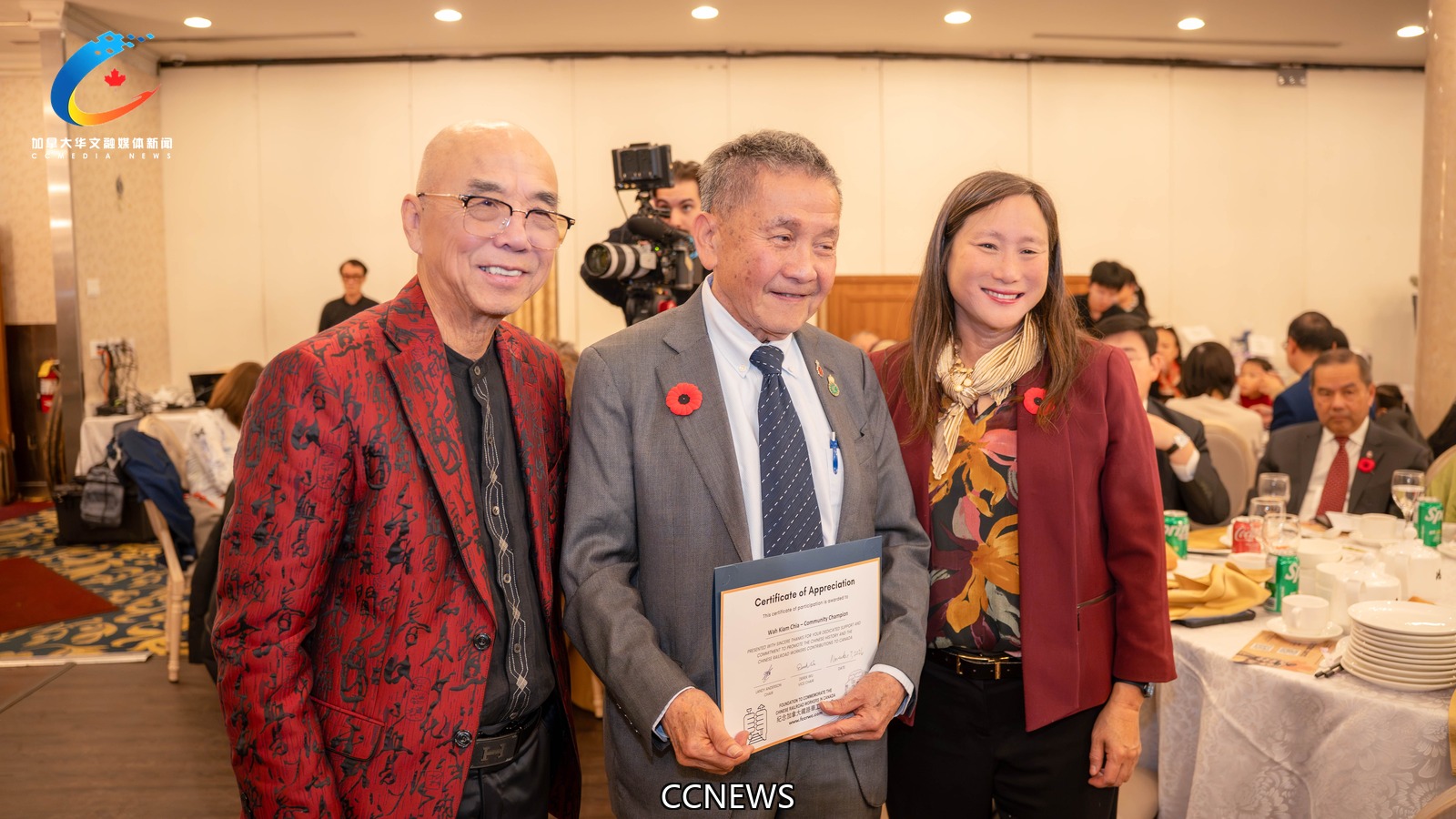
Binh Chau, treasurer of the foundation, and Derek Wu, vice-chair, presented a Certificate of Appreciation for Community Contribution to Dr. Wah Kiam Chia, recognizing his many years of outstanding service to the Chinese community in health and in the transmission of history.
Sonya Pon-Davidson then took the stage on behalf of the Pon family to announce this year’s James Pon Memorial Scholarship. Sarah Chan, a Chinese Canadian student from Ontario, took first place with a research project that powerfully combines personal reflection with historical inquiry. “Sarah’s work not only shows meticulous historical research, but lets us feel the emotional warmth that reaches across a century,” Sonya said. “That empathy for, and transmission of, the spirit of our predecessors among the younger generation is the deepest reason we established this scholarship.”
In depth: the Foundation to Commemorate the Chinese Railroad Workers in Canada (FCCRWC)
The host of the evening, the Foundation to Commemorate the Chinese Railroad Workers in Canada (FCCRWC), is one of Canada’s most respected national registered charities and has stood on the front line of rescuing, recording and sharing the history of Chinese Canadians for decades.
- Origins and the monument: In the 1980s, in response to the long-standing neglect of the Chinese contribution to the railway in history textbooks, descendants of Chinese railroad workers and community pioneers led by James Pon founded the foundation. With the support of Chinese Canadians and Canadians from all walks of life, the foundation built the famous Chinese Railroad Workers Monument beside the Rogers Centre on Blue Jays Way in downtown Toronto in 1989. The imposing sculpture, designed by artist Liang Wenyan, vividly recreates the perilous scene of Chinese workers suspended on cliff faces blasting rock, and has become an enduring national landmark in the heart of the city.
- Campaigning for historical redress: The foundation has long campaigned for the Canadian government to formally apologize to and redress the Chinese community for the Head Tax and the Chinese Exclusion Act, so that mainstream society fully understands the institutional injustice suffered by Chinese pioneers in difficult times.
- Inspiring the next generation: The foundation established the James Pon Memorial Scholarship to encourage high school and university students across Canada to study the history of Chinese immigration and the legacy of the railway workers. It holds a wreath-laying ceremony at the monument every Canada Day (July 1) and an annual tribute on November 7, the anniversary of the Last Spike, so that the spirit of the railway workers becomes a torch that inspires generations of Chinese Canadians.
A moment frozen in time: a group photograph for the ages
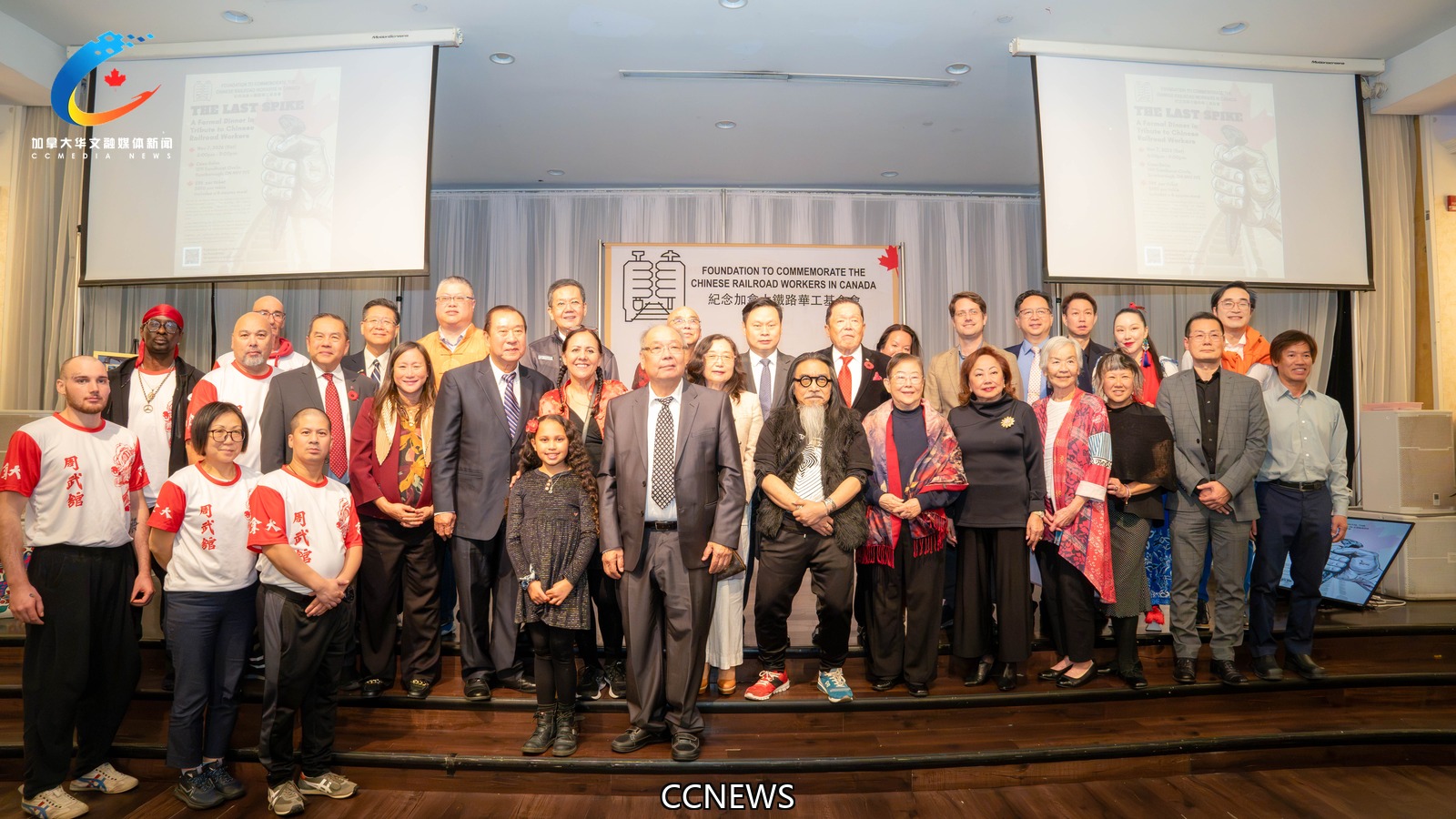
At the close of the dinner, in front of the giant backdrop of the FCCRWC and a steam locomotive symbolizing the pioneering spirit, all the guests of honour, public officials, diplomatic envoys, descendants of railroad workers and head-tax payers, teachers and students of the kung fu club, and young scholars came onto the stage and stood shoulder to shoulder for a treasured group photograph.
One hundred and forty-one years ago, beside the cold spike driven into the ties, no place was left for the Chinese. Today, 141 years later, amid flashing cameras and warm applause, the glory of the Chinese pioneers has been forged deep into the national memory of the Maple Leaf country.