With aid commitments to Ukraine now above $26 billion — and Canada facing fiscal pressure and strained public services at home — should Ottawa review the scale, the use and the end date of that aid?
CC.NEWS — analysis by editor-in-chief Jin Hong, November 7, 2026
Since the war in Ukraine began in 2022, Canada has been one of Kyiv’s most important supporters. From military equipment and financial loans to humanitarian assistance and post-war reconstruction, Ottawa has steadily increased its support.
But as the scale of that aid keeps growing, a question increasingly on the minds of Canadian taxpayers has emerged:
Canada’s own finances are hardly flush. Housing, health care, seniors’ care and infrastructure all need large sums. So why does the government keep pouring enormous amounts into Ukraine? Where exactly does the money go? How much more will be given? And when will there be a clear end point?
This is not a simple question of being pro-Ukraine or anti-Ukraine. It is a question of Canada’s fiscal responsibility, the rights of taxpayers, and the transparency with which public money is used.
1. More than $26 billion: what exactly has Canada promised?
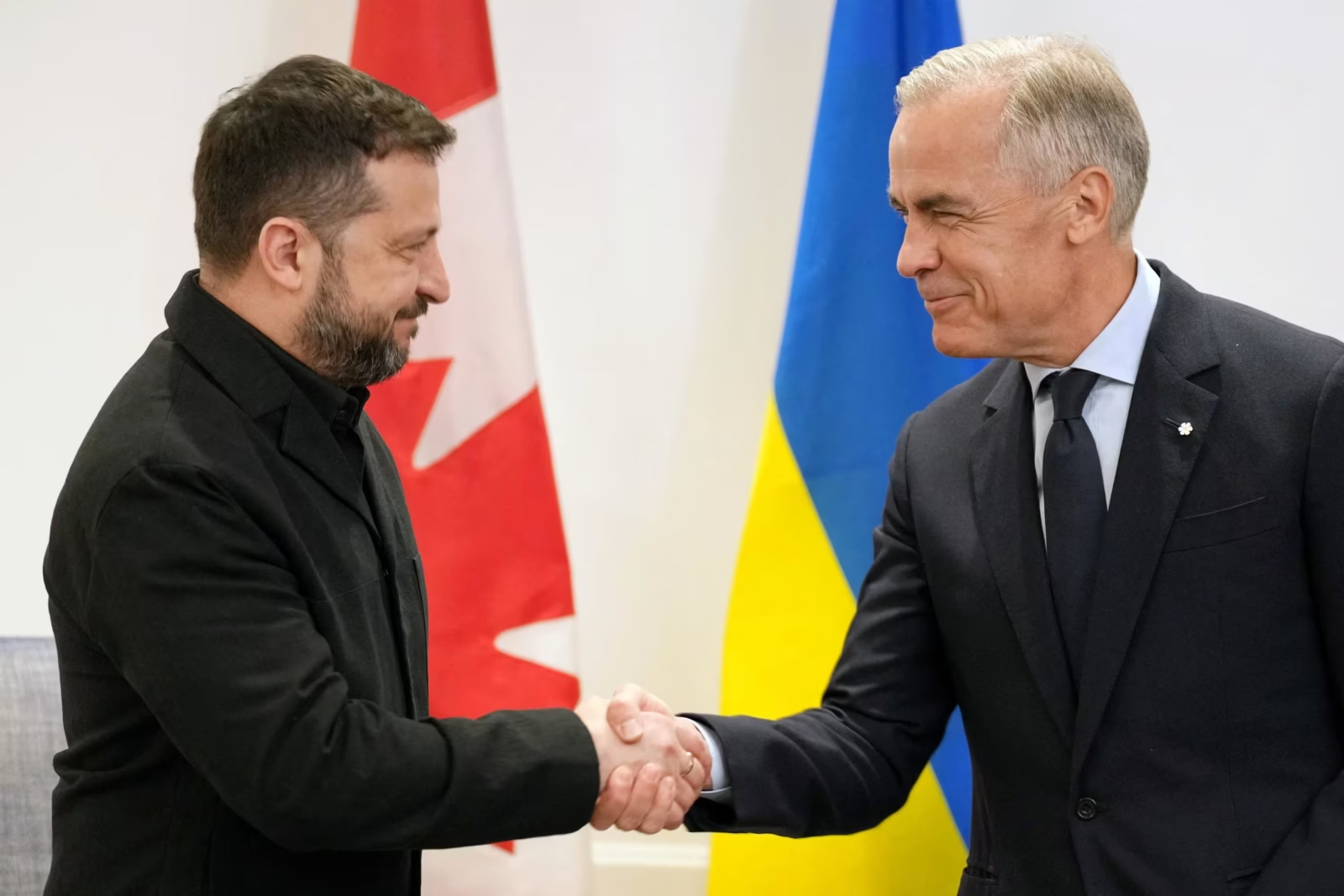
According to information released by the Prime Minister’s Office on September 10, 2026, Canada’s various aid commitments to Ukraine since 2022 have exceeded $26 billion.
That assistance spans military support, financial aid, humanitarian aid, development cooperation, economic recovery and reconstruction. Canada has also announced closer cooperation with Ukraine on drone production, the defence industry and critical minerals.
The government frames this support as helping Ukraine defend its sovereignty, strengthen its defences and create the conditions for a lasting peace.
But what does $26 billion actually mean?
First, it does not mean that Canada has handed $26 billion in cash to the Ukrainian government. The published total covers different kinds of commitments, loans, military equipment and other programs — and money actually disbursed is not the same as money promised.
That is precisely why taxpayers need to understand how the figure is built:
What has actually been paid out? What is a loan? What is the estimated value of military equipment? What is merely a future commitment? Can the loans be repaid? And who oversees all of this?
If the government publishes only a growing total without clearly explaining where each category of money actually goes, how can taxpayers judge whether the money is doing any good?
2. Canada’s own finances are strained, and domestic problems also need money
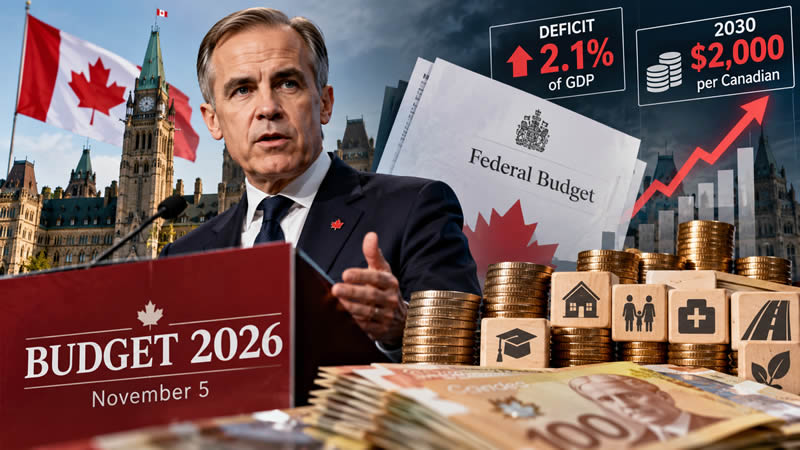
According to the Department of Finance’s Annual Financial Report for 2025–26, released in September 2026, the federal government ran a deficit of $39.3 billion in the fiscal year ending March 31, 2026.
Over the same period, accumulated federal debt reached about $1.306 trillion, and annual interest payments on the public debt reached $53.5 billion.
That means Ottawa must set aside tens of billions of dollars a year simply to service the debt, money that cannot go to new public services or infrastructure.
Meanwhile, the practical problems facing ordinary Canadians have not gone away:
Housing prices and rents remain a heavy burden; access to health care and family doctors is a live concern; and seniors’ care, public transit and infrastructure all require sustained investment.
Against that fiscal backdrop, the government owes taxpayers an explanation: how exactly is it setting priorities between foreign aid and domestic public spending?
Canada is not a country that can spend without limit or without fiscal constraints.
Helping the Ukrainian people through the hardship of war can be a legitimate humanitarian cause. But does that mean Canada must shoulder such an enormous financial and military commitment indefinitely?
Has the government carefully calculated what sustained foreign aid means for the country’s finances and for future taxpayers?
3. How much of the aid is actually necessary? Is there a ceiling and a deadline?
Aid to Ukraine does not come in only one form.
Emergency food, medical supplies, refugee support and civilian infrastructure are fundamentally different from long-term military aid, direct budget support and reconstruction funding.
Once war breaks out, providing essential humanitarian aid reflects the international community’s concern for civilian life and basic needs.
Long-term military and financial assistance, however, involves much more complex policy choices. It requires clear objectives, budgets, reviews and an exit mechanism.
Should the government publish each category of aid separately? Should it regularly assess the real effect of each program? Should it set an annual budget ceiling, reviewed periodically by Parliament?
And the sharpest question of all: if the war drags on for years, must Canada simply increase aid year after year?
Aid cannot have a beginning but no deadline; it cannot consist only of promises without any assessment of results; and it cannot emphasize international responsibility while failing to explain its responsibility to domestic taxpayers.
4. Is the use of funds in Ukraine transparent? Who is watching the taxpayers’ money?
This is a link in the chain that cannot be avoided.
Ukraine faced long-standing challenges in fighting corruption and supervising public funds well before the war. During wartime, military procurement, government budgets, reconstruction contracts and emergency spending require even stricter oversight.
But let us be precise: the existence of a corruption risk does not prove that Canadian aid has been misappropriated, and the fact that corruption cases have occurred in Ukraine does not mean that all aid money has gone astray.
The real question is whether the Canadian government has enough information to show that the money was used for its agreed purposes. Are there independent audits? Is there a clear tracking mechanism? When problems are found, can funding be suspended and people held accountable?
One parliamentary record is worth noting. In June 2026, Vincent Neil Ho, Member of Parliament for Richmond Hill South, filed a written question asking the federal government to explain the actual disbursement of each category of aid to Ukraine since 2022, what audits and reviews have been conducted, whether the funds were used for their intended purposes, and whether value for money was achieved.
The question asked the government to identify, item by item, the auditing bodies, the timing of audits and the results. According to records published by the House of Commons, the question is still marked as awaiting a response.
That suggests that, at least at the parliamentary level, the actual disbursement and auditing of aid money remain questions the government still needs to answer.
For commitments already above $26 billion, taxpayers are entirely entitled to a clear accounting:
Which institutions received the money? Through what channels was it paid? Who ultimately used it? Which projects are complete? Which have been independently audited? Were problems found? If funds were not used as agreed, who is responsible?
This is not a challenge to the Ukrainian people. It is a basic requirement of public financial management.
If the government has the right to spend taxpayers’ money, it has the duty to tell taxpayers where that money went.
5. Does sustained aid promote peace, or make war easier to prolong?
Another question that cannot be avoided is the relationship between continued Western aid and negotiations toward a ceasefire.
The financial and military support Ukraine receives objectively strengthens its ability to keep defending itself and keep fighting. Supporters argue that this is a necessary means of helping Ukraine resist military attack and secure favourable terms for peace.
But from a taxpayer’s perspective, there is another question worth discussing:
If Western countries keep supplying money and weapons, does Ukraine gain more room to insist on its own negotiating terms? Is that support helping to end the war sooner, or is it objectively extending the capacity to keep fighting?
Of course, one cannot simply blame Canadian aid for Ukraine’s refusal of a particular ceasefire proposal. Ceasefire talks involve territory, security guarantees, Russia’s demands and Ukraine’s fears about its future security. Nor can the continuation of the war be attributed to one side’s choices alone.
But Western aid should likewise not be treated as a policy option that needs no discussion.
If Canada has already committed tens of billions of dollars yet sees no clear roadmap to a ceasefire and no measurable progress toward peace, should the government review its aid policy?
What exactly is Canada’s aid objective? Is it to support the war indefinitely, or to help Ukraine achieve security, stability and peace?
If the ultimate goal is peace, then aid policy should be linked to advancing negotiations, reducing the losses of war and building sustainable security arrangements — not judged merely by whether the aid figure keeps rising.
6. Canadian taxpayers have the right to demand a new accounting
Canada’s support for Ukraine has continued for years, and its aid commitments now exceed $26 billion.
At that scale, the government should reassess its aid policy from the standpoint of fiscal responsibility and taxpayers’ rights.
In this writer’s view, at least the following should be done:
First, publish a complete, clearly categorized account of the aid, distinguishing actual disbursements, future commitments, loans, grants and estimated values of military equipment.
Second, conduct regular independent audits of the money already disbursed, and publish the auditing bodies, the findings and the results achieved.
Third, reassess the necessity of long-term military and financial aid, and set a clear annual budget, policy conditions and review deadline.
Fourth, treat humanitarian aid differently from long-term military and financial aid. Emergency help for civilians can continue according to real need, but long-term aid must not become an open-ended fiscal commitment.
Fifth, link aid policy to the peace process, and regularly explain to the Canadian public whether the aid is genuinely helping to advance ceasefire talks and achieve a lasting peace.
The Canadian government should recognize that while international responsibility matters, responsibility to domestic taxpayers matters just as much.
Conclusion: Ottawa must first answer to Canadian taxpayers
Helping the Ukrainian people does not mean Canada must bear Ukraine’s war and financial costs indefinitely.
Canada is not a country without domestic problems. Housing, health care, seniors’ care, public infrastructure and national defence all require large public investment. The federal government itself is under pressure from deficits and enormous debt-interest payments.
In that situation, every additional dollar of foreign aid should come with an explanation to taxpayers of why it is necessary, how it will be used and what it is expected to achieve.
We are not asking Canada to turn a blind eye to the suffering of the Ukrainian people, nor denying the value of emergency humanitarian aid.
What we question is this: should aid have no ceiling? Is the money genuinely being overseen? Do long-term military and financial commitments have a clear deadline? And if the peace process fails to make the expected progress, should the government adjust its policy?
Canadian taxpayers’ money is not a fund the government can commit indefinitely at will.
After more than $26 billion, how much is the next instalment? How much next year? And in five years?
The government cannot simply tell taxpayers “this is what we have committed.” It should answer:
Where exactly is this money going? Why does more need to be given? And when will it end?
The government has a duty to get this accounting right — and a duty to answer to Canadian taxpayers.